Published April 3, 2026
Into the Brooklyn Botanic Garden
Brooklyn Botanic Garden
There’s something I kept noticing at the Brooklyn Botanic Garden: I’m drawn to beauty when it has structure.
Not just color, not just flowers, not just the obvious prettiness of something in bloom. Structure –-repetition, branching, spirals, stripes, textures, the feeling that a plant has built itself according to some hidden logic. Some of the plants felt comforting. Some felt ornamental. Some felt ancient, engineered, or a little ominous.
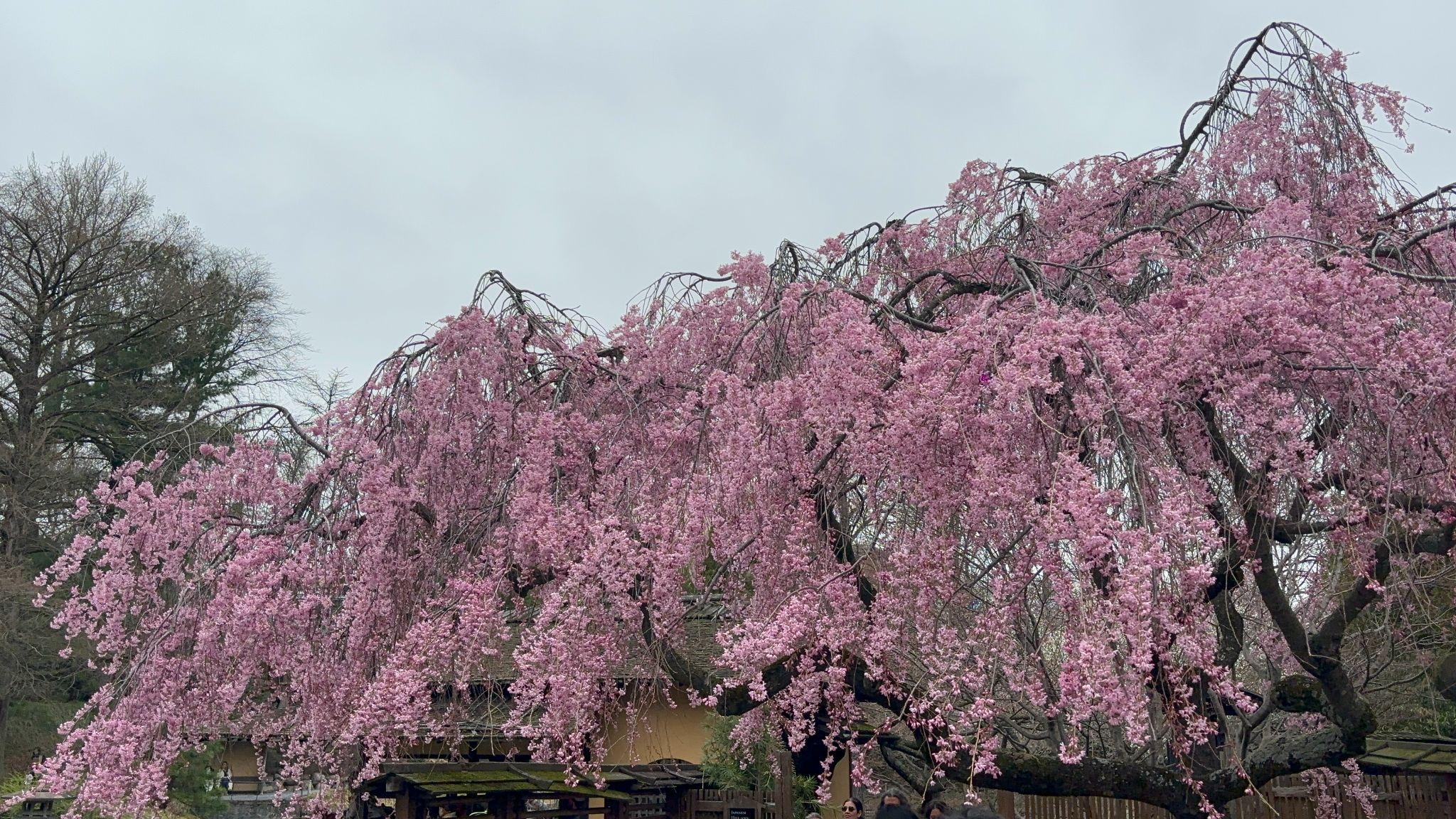
Weeping cherry
(likely weeping higan cherry, Prunus pendula ‘Pendula Rosea’)
There’s something so beautiful to me about weeping trees, especially weeping cherries.
This one was in bloom, completely pink, and the way it cascaded downward felt unusual. You don’t see that shape in many trees. I think part of the beauty is the scarcity of it. It’s not so rare that you never get to see it, but it is rare enough that it sticks out when you do.
It also feels personal. A lot of trees grow upward, away from you, into the sky. A weeping tree feels like it’s coming down toward you. It feels like it is making space for the individual person standing under it.
There’s a feeling of shelter in that. It feels safe, comforting, almost protective. But the beauty is also fragile. The petals feel like they could fall at any second. That’s part of what makes it so moving: it is huge and enveloping, but also temporary. You’re seeing it at exactly the moment when it exists like this.
Research note:Brooklyn Botanic Garden specifically highlights weeping higan cherries as among its earlier-blooming cherry trees, and identifiesPrunus pendula ‘Pendula Rosea’as one of the signature pink, cascading cherry forms in the Japanese Hill-and-Pond Garden. BBG also notes that different cherry cultivars bloom in succession, which is part of why timing feels so precious during cherry season.
White blossoms
(likely a flowering Prunus, possibly Japanese apricot / Prunus mume)
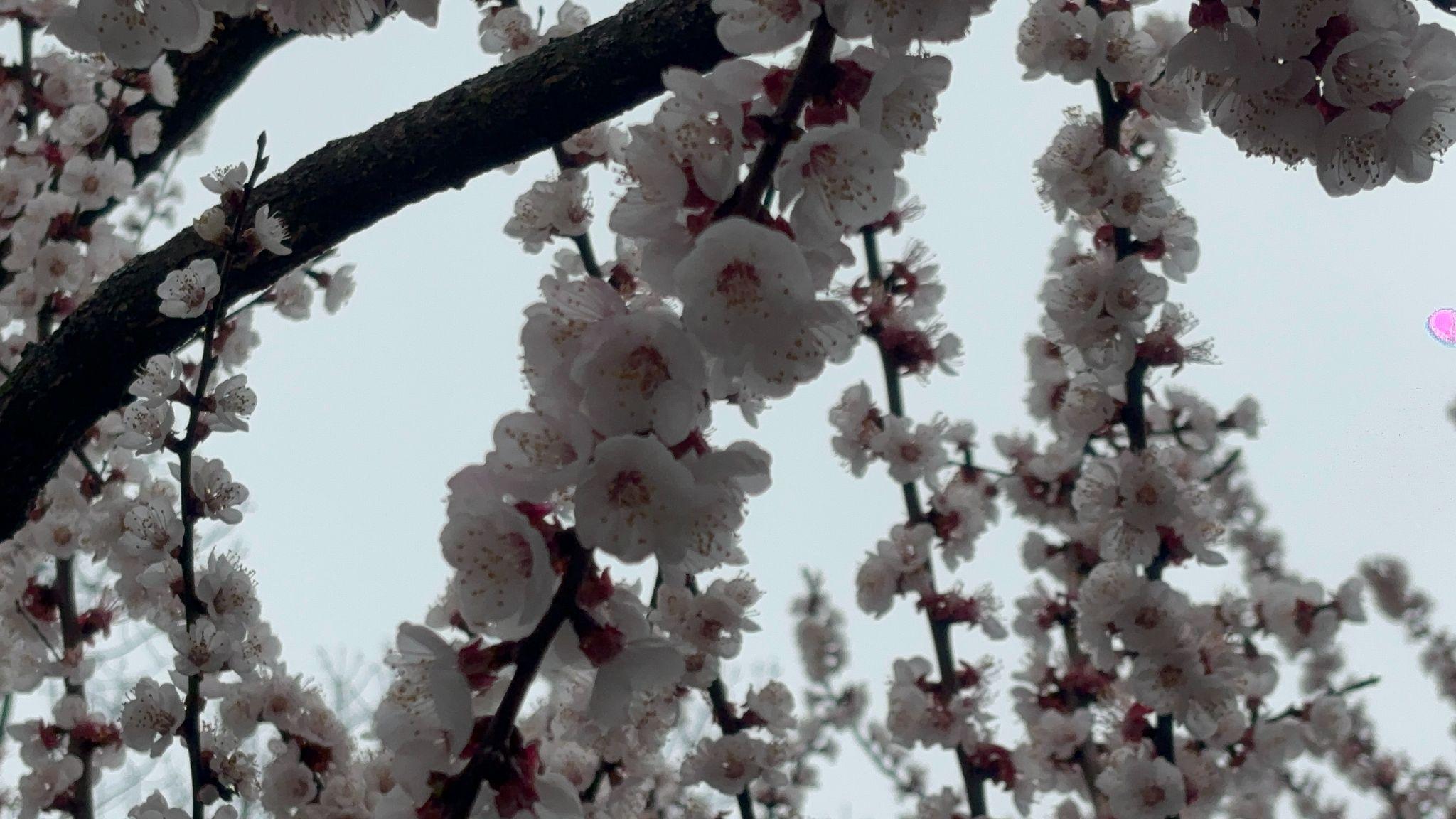
The white-pink blossoms looked like little bells.
They were especially satisfying to me because of their delicacy. They grew in all directions from the branch, and the repetition of that was so pleasing. My brain is really attracted to patterns, and this was a perfect example of that: small forms repeating, spreading, clustering, and turning a plain branch into something ornamental.
From far away, blossoms like this can just read as flowers on a branch. Beautiful, but general. Up close, though, you start to see the actual texture. You see the tiny centers, the red-pink bases, the little shapes repeating again and again.
The timing mattered too. Seeing them in bloom felt lucky. There’s something special about catching a tree in that brief interval where the flowers are doing all the work and the whole branch still feels delicate and exposed. It makes the blossoms feel even more ornamental, because they seem to exist for such a short time.
Research note:Brooklyn Botanic Garden’s Plant Finder includesPrunus mumein the collection, and Japanese apricot is one of the classic early-blooming flowering trees that can look especially striking on bare or nearly bare branches. I’m treating this ID as probable rather than certain from the photo alone.
Pale green and purple flower
(likely Armenian grape-hyacinth, Muscari armeniacum)
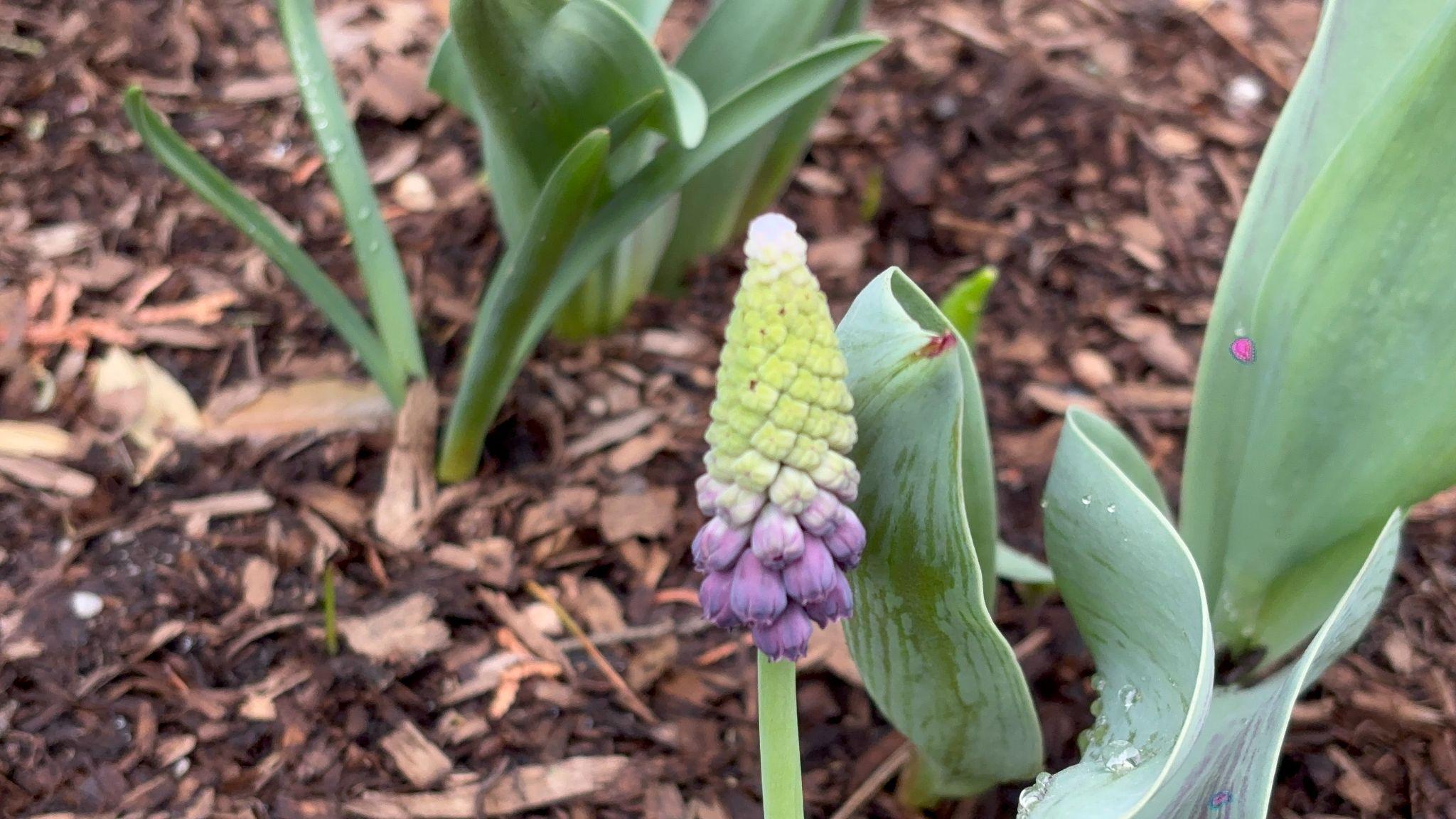
This one grabbed me immediately because of the fractal spiral.
That was easily the thing that pulled me in first: the structure. The pale green top seems to tighten and build toward a center, while the purple lower part makes the shape even more visible. It almost looks engineered. It feels tiny, but also like a perfect system.
There’s something especially satisfying about plants that reveal their geometry so clearly. You can look at them aesthetically, but you can also almost feel the construction process behind them. It’s one of the clearest examples, to me, of the beauty and intense mathematical structure of plants.
Research note:The flower looks likeMuscari armeniacum, or Armenian grape-hyacinth, which Brooklyn Botanic Garden does grow. More broadly, spiral and repeating patterns in plants are often discussed throughphyllotaxis—the arrangement of leaves, flowers, or other organs as they emerge. Research on plant development shows that these patterns are shaped by local growth rules and by the distribution of the plant hormoneauxin, which helps position new growth where there is space. That means the plant does not “plan” a spiral in any conscious sense; the pattern emerges from how it grows.
Corkscrew hazel
(Corylus avellana ‘Contorta’)
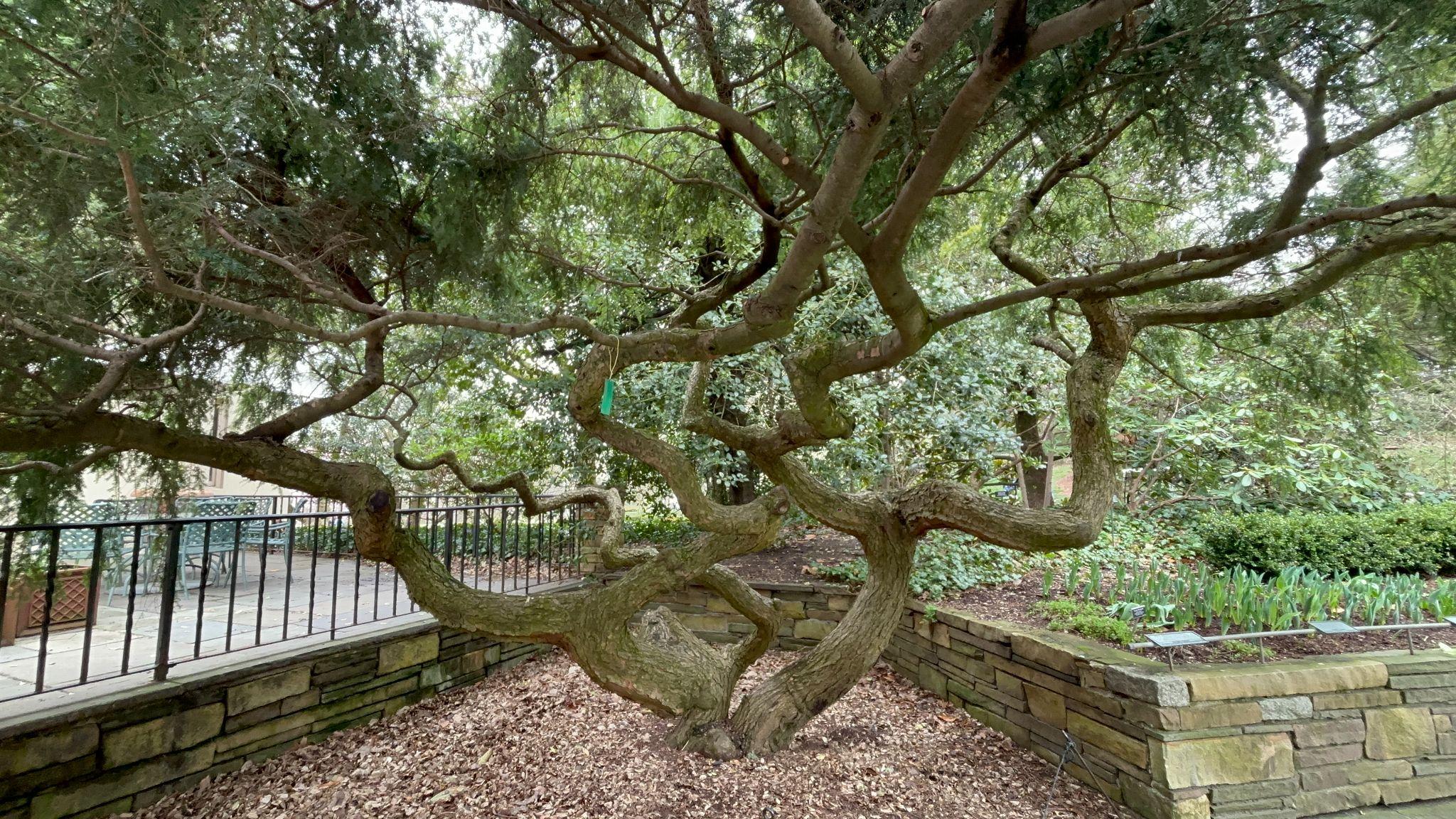
The corkscrew hazel has such a strong personality.
It reminded me of branching Y’s. I’ve always liked the letter Y, obviously, because my name starts with Y. But there is also something satisfying about the way the tree keeps splitting: one branch becoming two, then each of those twisting off again in some new direction.
It’s gnarly. The branches almost look like fingers creeping toward the sky. There’s an old-lady, witchy quality to it. It feels a little ominous, but in a friendly way. Not scary exactly—more like it has intense character.
This is another kind of beauty. It isn’t soft or floral. It’s expressive. It looks like gesture, like handwriting, like a body that grew through some long argument with itself.
Research note:Brooklyn Botanic Garden’s Plant Finder listsCorylus avellana ‘Contorta’, commonly called corkscrew hazel. Even the official name feels satisfying here, because “contorta” really does describe the whole visual effect: twisted, expressive, unmistakably full of character.
Monkey puzzle tree
(Araucaria araucana)
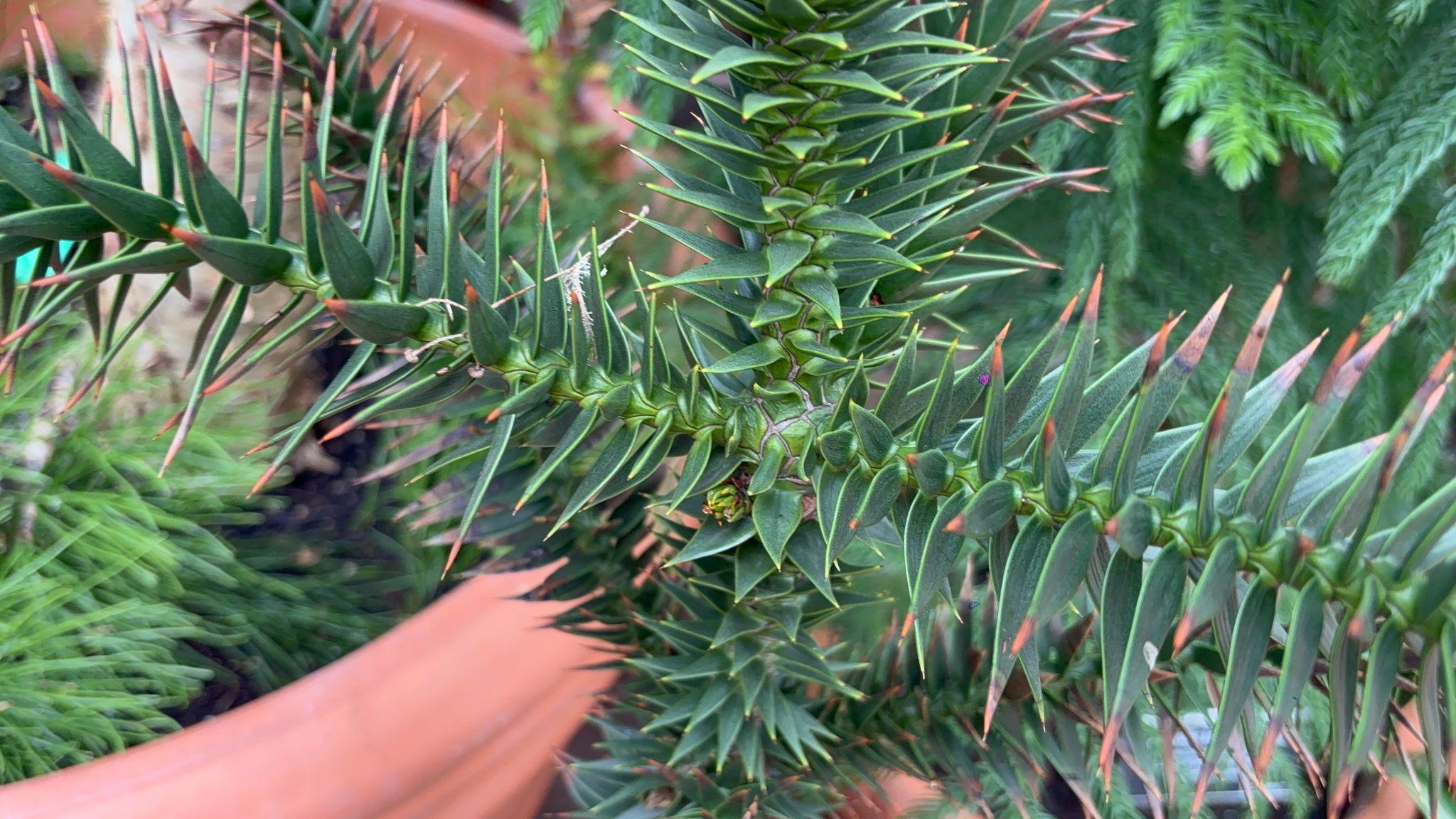
The monkey puzzle tree was another one that felt intensely structured.
Again, I don’t know if “mathematical” is exactly the right word, but that is the feeling it gives me. The pattern is so strong. The leaves repeat around the branch in a way that feels almost modelable. I could imagine making it in 3D: take a few pieces, rotate, move along the axis, rotate again, move again.
It feels both natural and engineered.
I also loved the little prickly orange-tipped points. They make the whole thing feel sharp, armored, and beautiful. It is not soft beauty. It is defensive beauty. It has a prehistoric, sculptural quality, like something that evolved its own architecture and is not trying to be approachable.
Research note:Brooklyn Botanic Garden growsAraucaria araucana, the monkey puzzle tree, and describes its branches as distinctive and spiky. BBG also notes that monkey puzzle is also known asChilean pine, which makes sense given how conifer-like it feels even while looking completely unlike an ordinary pine.
Bonsai
(flowering bonsai, likely a Prunus in the Bonsai Museum)
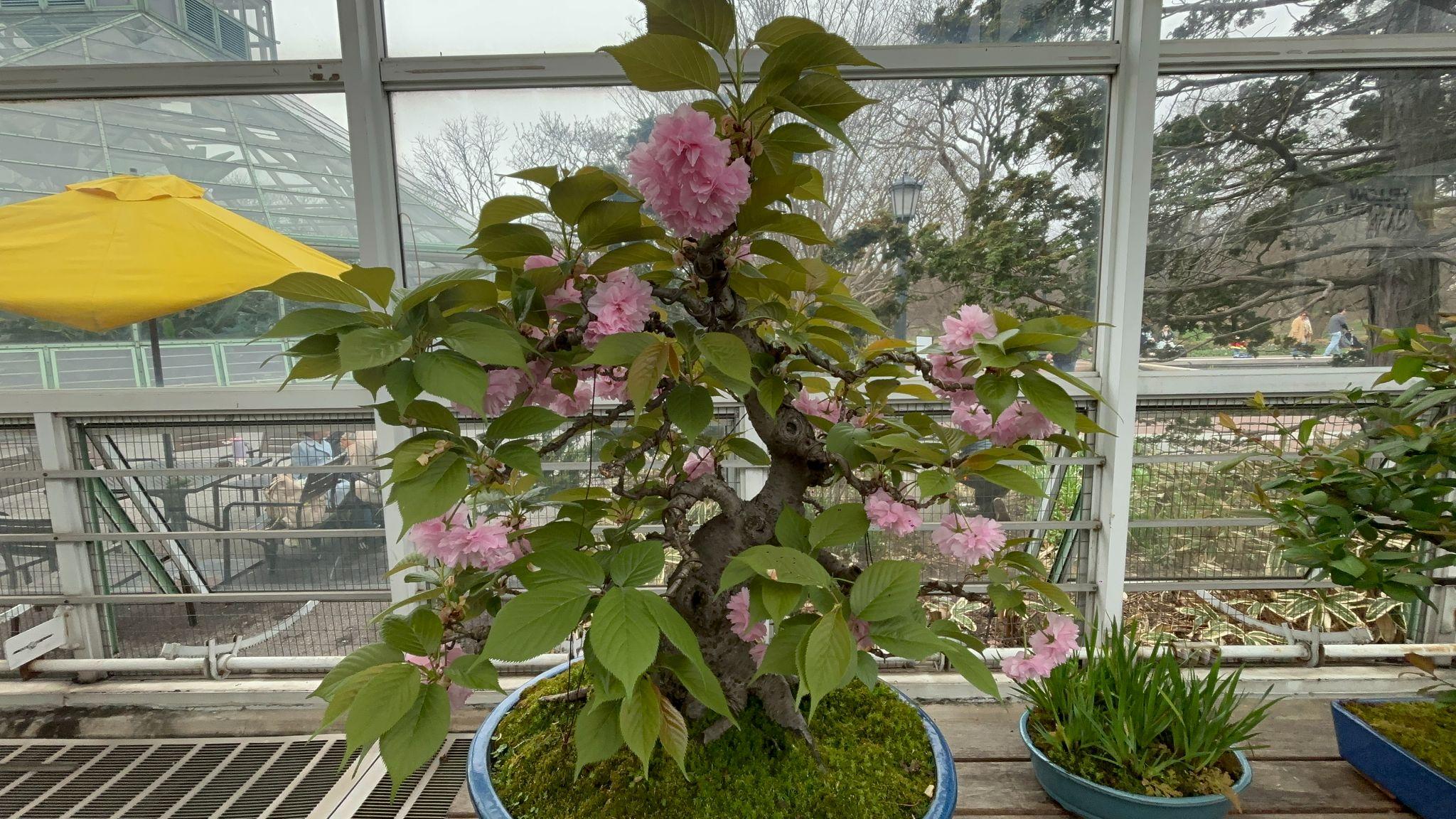
I love bonsai trees because they hold two opposite ideas at once.
Trees are usually majestic because they are large, old, and expansive. They take up space. They outlive people. They feel like they deserve respect. Bonsai keep that same feeling of age and dignity, but in a small form.
That double-sidedness is what I love: elegant and old, deserving of respect, but miniature. A bonsai can be small and still feel ancient. It can sit in a pot and still feel like a whole landscape.
I especially like bonsai that snake, split off, and move in different directions—the ones that feel like they are trying to take up more space than the container should allow.
Research note:Brooklyn Botanic Garden’s Bonsai Museum has a long-running bonsai collection, and BBG says some of its trees are well over a century old. The display also rotates seasonally, which helps explain why bonsai at BBG can feel so curated and specific to the moment. BBG’s Plant Finder also includesPrunus mumein the bonsai collection, though I’d still keep this ID tentative unless you noted the label.
Patterned groundcover
(Tradescantia zebrina var. zebrina, silver inchplant)
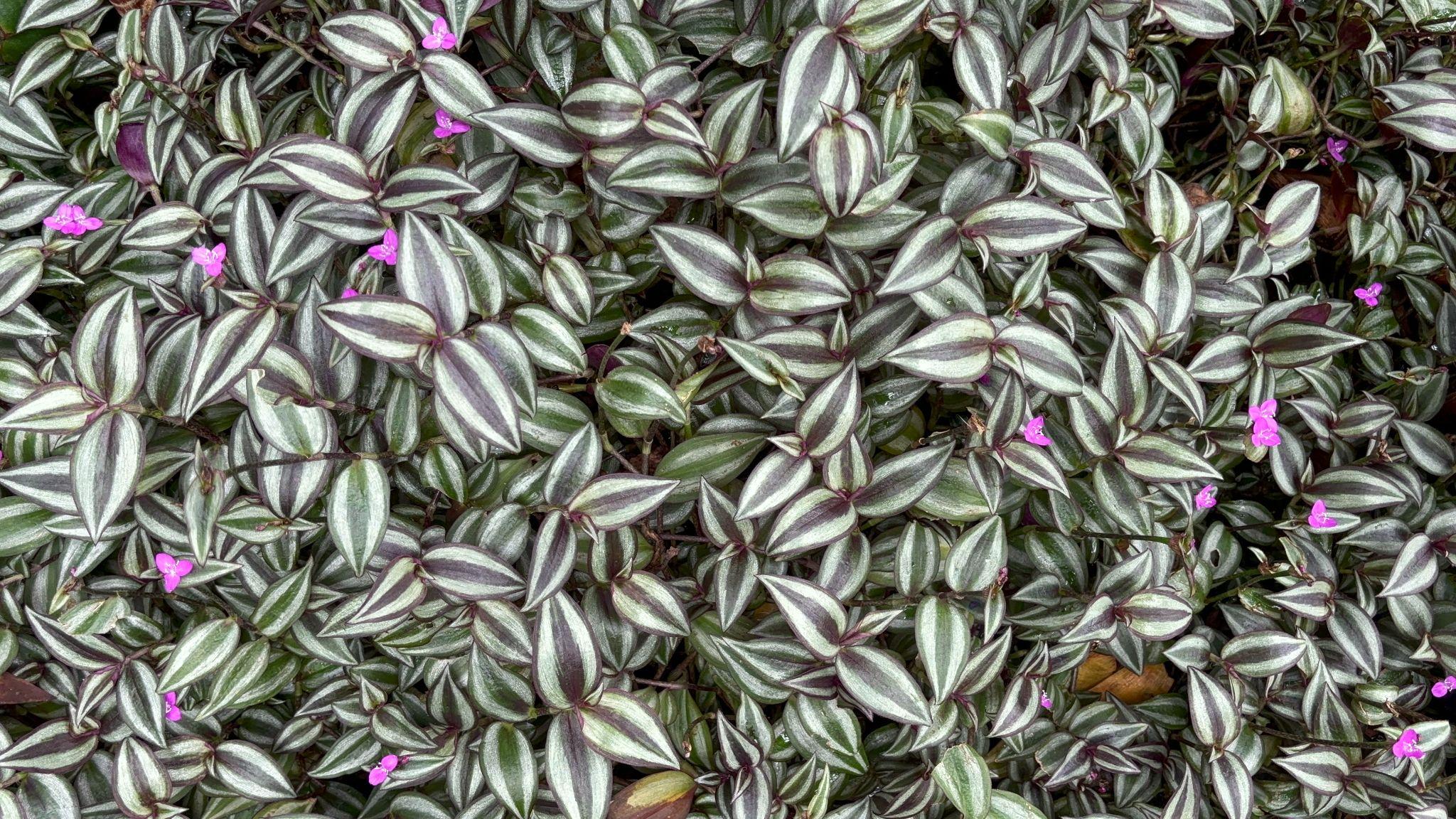
The patterned groundcover was beautiful because it felt almost like fabric.
The leaves had purple undertones mixed with green, dark green, and a minty silver color. Then there were these tiny bright pink flowers scattered through it like iridescent speckles. The whole thing created a texture more than a single focal point.
This is the kind of plant that works almost like a surface pattern. You don’t look at one leaf only. You look at the repetition: stripes, contrast, shine, little interruptions of pink. It feels botanical, but also like textile design.
What I liked most here was that the flowers were almost secondary. They mattered, but mostly as accents. The real attraction was the leaf pattern itself.
Research note:This looks likeTradescantia zebrina var. zebrina, commonly called silver inchplant, which BBG lists in its Tropical Pavilion. The purple undersides and silvery striping are a big part of why it reads so much like a design surface rather than just foliage.
Pine
(likely a pine in the conservatory; possibly Himalayan pine / Pinus wallichiana, though I’d keep that tentative)
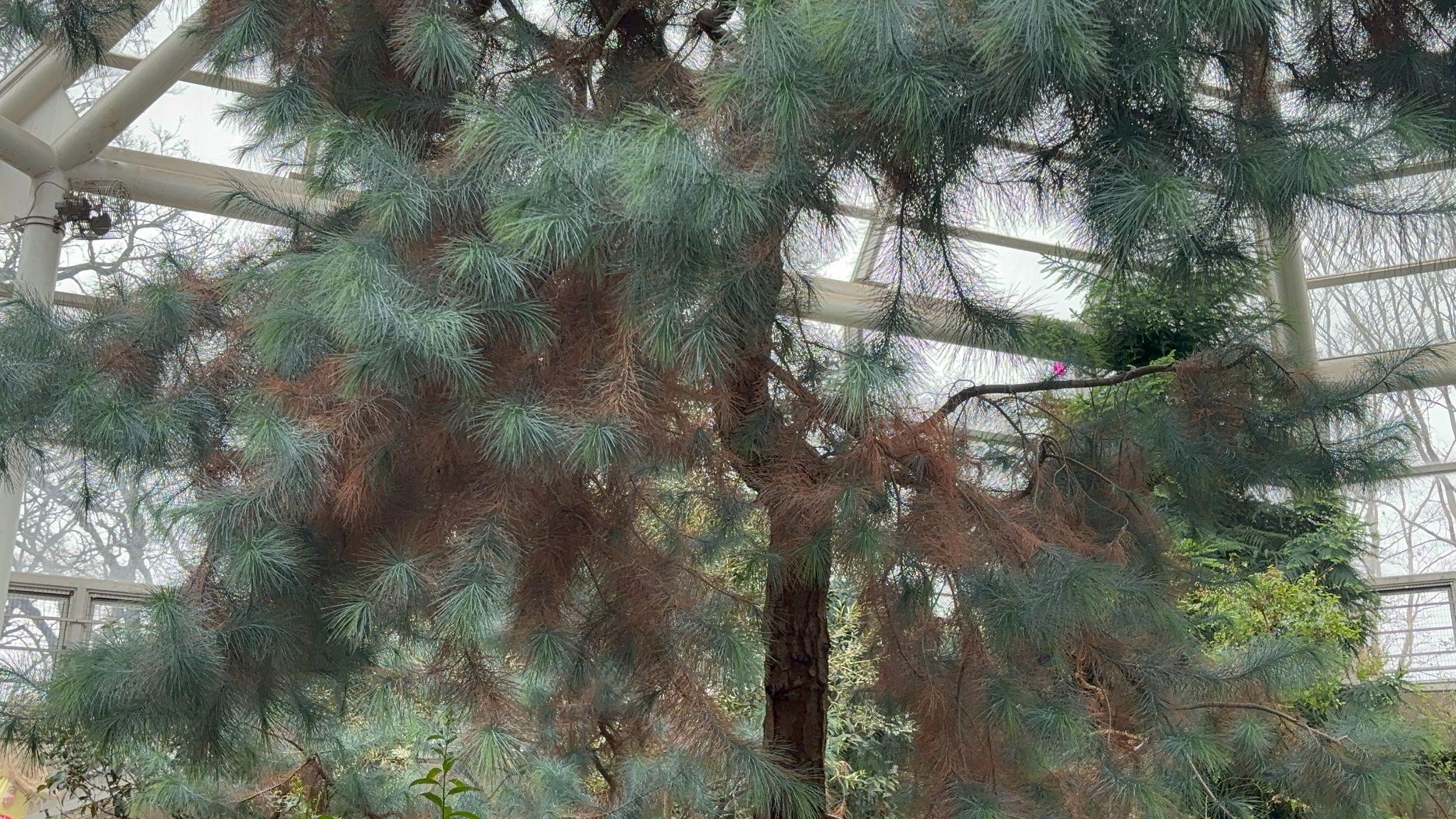
The pine was mostly about texture.
Pines are a little prickly up close, so they’re not always my favorite in that immediate tactile sense. But I do like them because they are constant. Through winter, they stay themselves. They don’t lose everything. They don’t go bare in the same way. There is something reassuring about that.
This one looked soft, even though I know it is not exactly soft. That contrast is interesting: soft-looking, hard-edged, dense, needled, layered.
I think what pulled me in was that it looked like a material. Like something I could turn into a texture and use somewhere else. It wasn’t just a tree; it was a surface, a mood, a pattern of blue-green density and brown underneath.
Research note:Brooklyn Botanic Garden’s Plant Finder includes multiple pines, includingPinus wallichiana(Himalayan pine). I’d keep the exact ID tentative from the photo, but the visual quality you responded to—the layered, soft-looking needles and the constant evergreen presence—really is central to how pines read in a garden.
Closing
What connects all of these plants for me is that they each show a different kind of beauty.
The weeping cherry is sheltering and fragile. The blossoms are delicate and ornamental. The pale green flower is fractal and engineered-looking. The corkscrew hazel is witchy and full of character. The monkey puzzle tree is armored and mathematical. The bonsai is small but majestic. The groundcover is textile-like and patterned. The pine is constant, dense, and textural.
It made the garden feel less like a collection of pretty plants and more like a training ground for perception. Every plant was doing something different with structure. Some were branching, some spiraling, some cascading, some repeating, some holding their shape through the season.
And that’s what I kept coming back to: beauty is not one thing. Sometimes it is softness. Sometimes it is pattern. Sometimes it is shelter. Sometimes it is the feeling that something alive has built itself according to rules you can almost understand, but not quite.