Published April 9, 2026
Beauty at Different Scales at the Natural History Museum
Beauty at Different Scales at the Natural History Museum

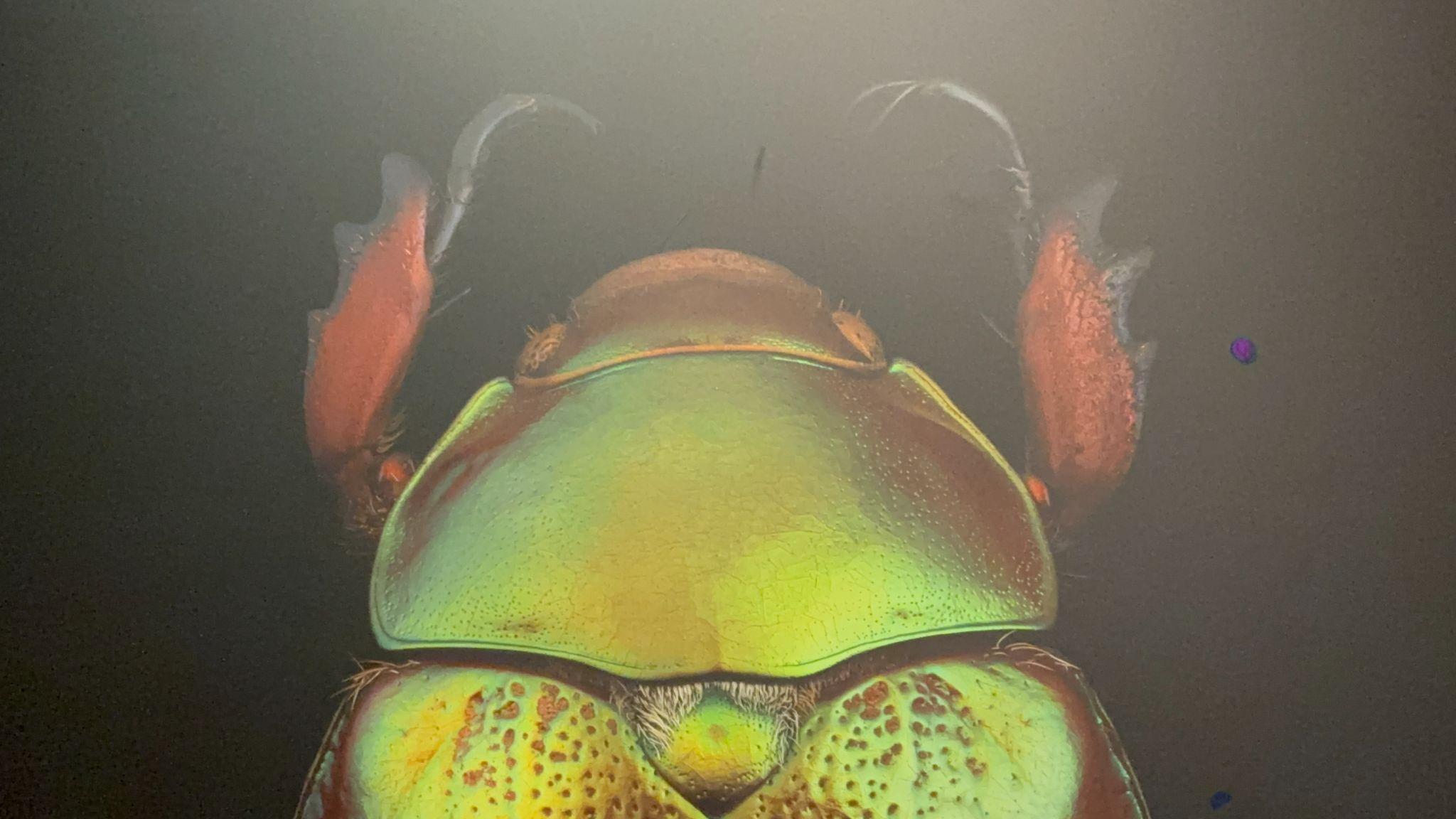
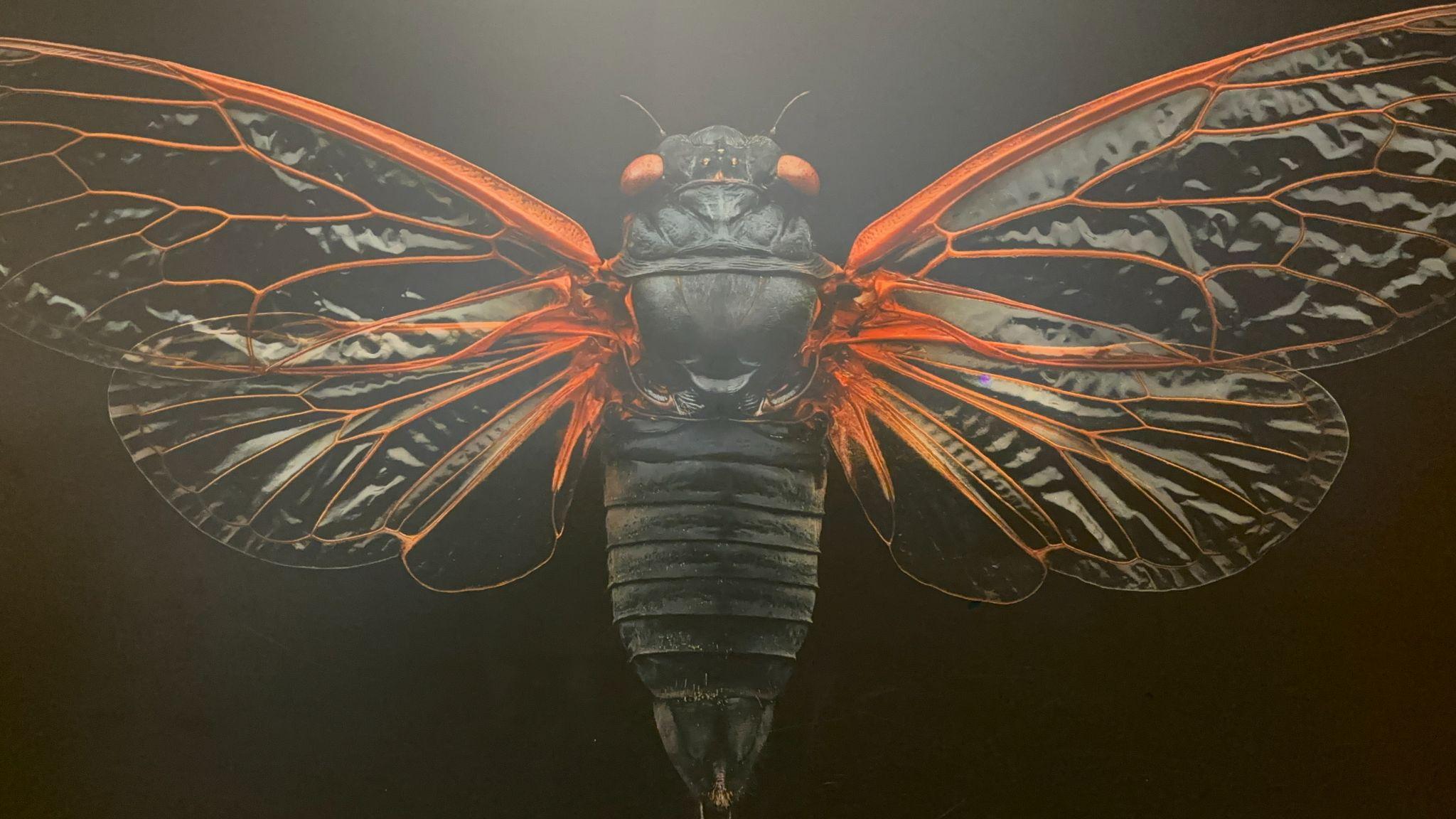
The first thing we saw in the Natural History Museum was these massive close-ups of bugs. It was especially striking because you can’t see these things with the human eye. You can only see them through something like UV or infrared, or whatever it is—I’ll need to check. So you can see patterns that you wouldn’t normally notice.
And also, they’re huge. They’re so detailed and vibrant. It’s very beautiful.
With the bugs, it was the shine and the colors. I felt like a bug being drawn toward them—like how a moth is drawn to a flame. I was attracted to the bugs. Something that was particularly interesting was the speckles on the moth, or whatever that second image is. The patterns, textures, and colors are what pulled me in.
People are definitely attracted to different things. For me, I’m attracted to patterns, textures, and colors. Other people might be attracted to minerals for a different reason: the fact that they’re so beautiful and also just blocks. But for me, it’s a lot about surface and structure. It’s about the things that tickle the brain.
Beauty, for me, is harmony. It doesn’t necessarily need to be harmony in one specific sense, but when things feel harmonious, they evoke a feeling. I think, generally, a pleasant feeling. There are a lot of things that go into beauty. Someone could ask me what my favorite thing is, and one answer might just be: things that are beautiful, things that are aesthetic. But that can come from a lot of different ways, places, structures, and phenomena.
There isn’t just one thing that makes something beautiful to one person. Obviously, there are some objective measures, but preference is huge. Beauty is in the eye of the beholder, to an extent.
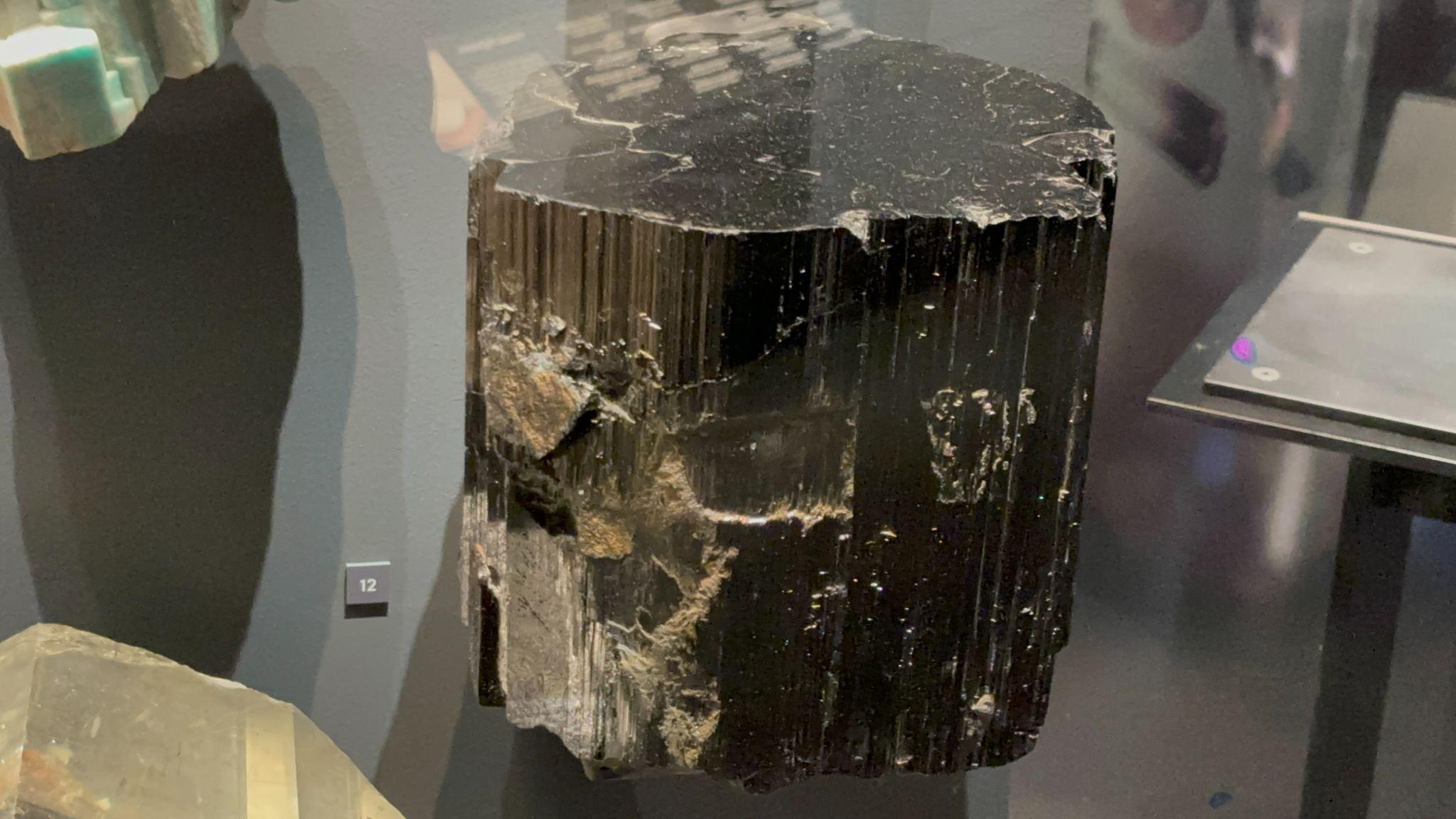
We walked around the museum and only got to the crystals at the end. The crystals were super cool. I liked how they grow in geometric structures. It’s very satisfying. These mathematical concepts are usually not things you really see. Everything is mathematical, of course, but here it’s visible at such a basic level: the prism, the crystal structure, the colors being produced.
The connection between the bugs and the crystals is that they’re both kind of iridescent and shiny, which is very, very cool. They’re completely different things, and they come from completely different processes, but they both result in something mesmerizing. They both feel like evidence of structure.
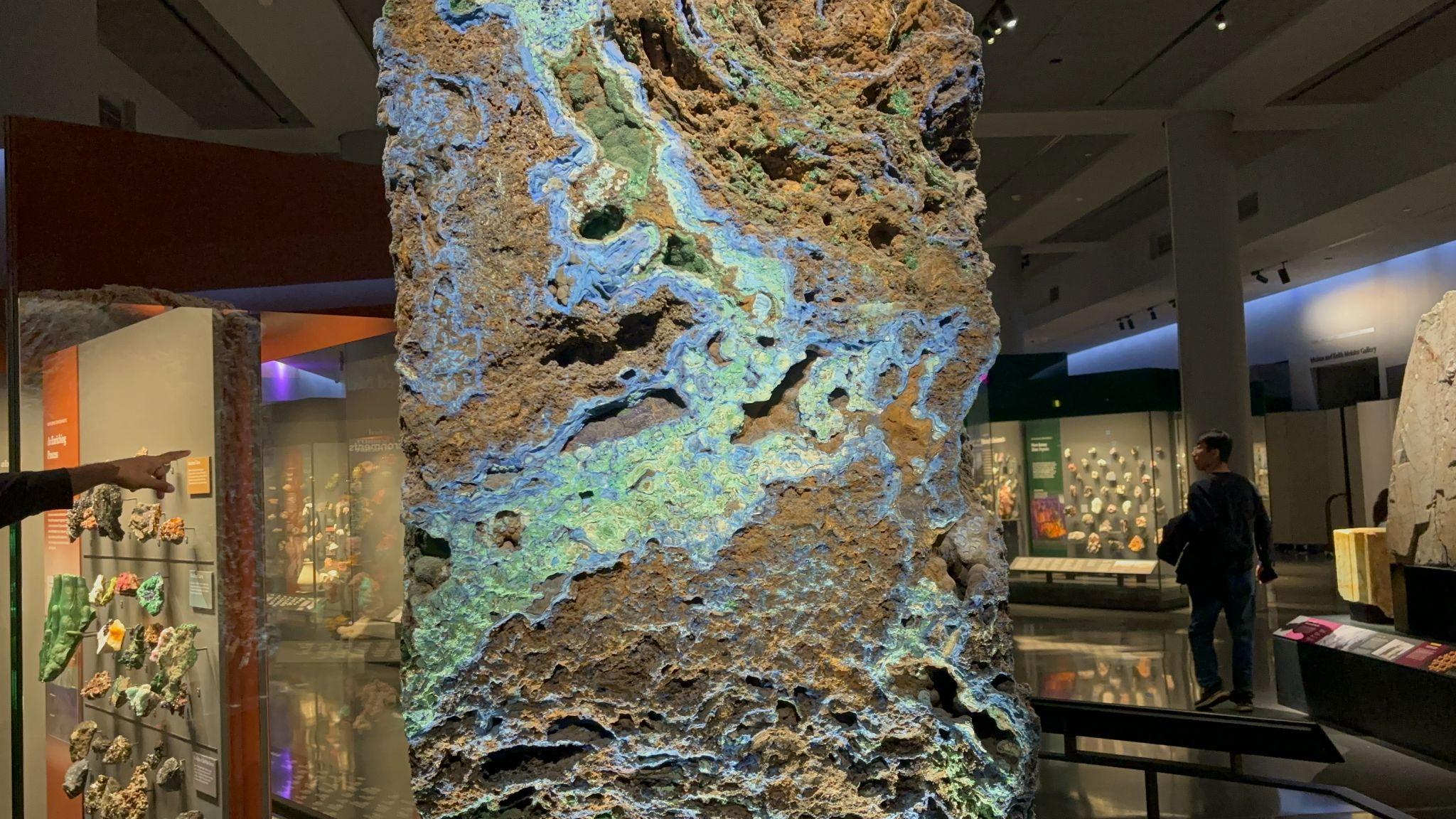
I think I’m really drawn to evidence of structure. Beauty can come from biology, from geology, from human hands, from mathematics, from light. There are all these different phenomena that can produce something visually appealing. The route is different, but the effect can be similar: I stop, I look closer, and I remember it.
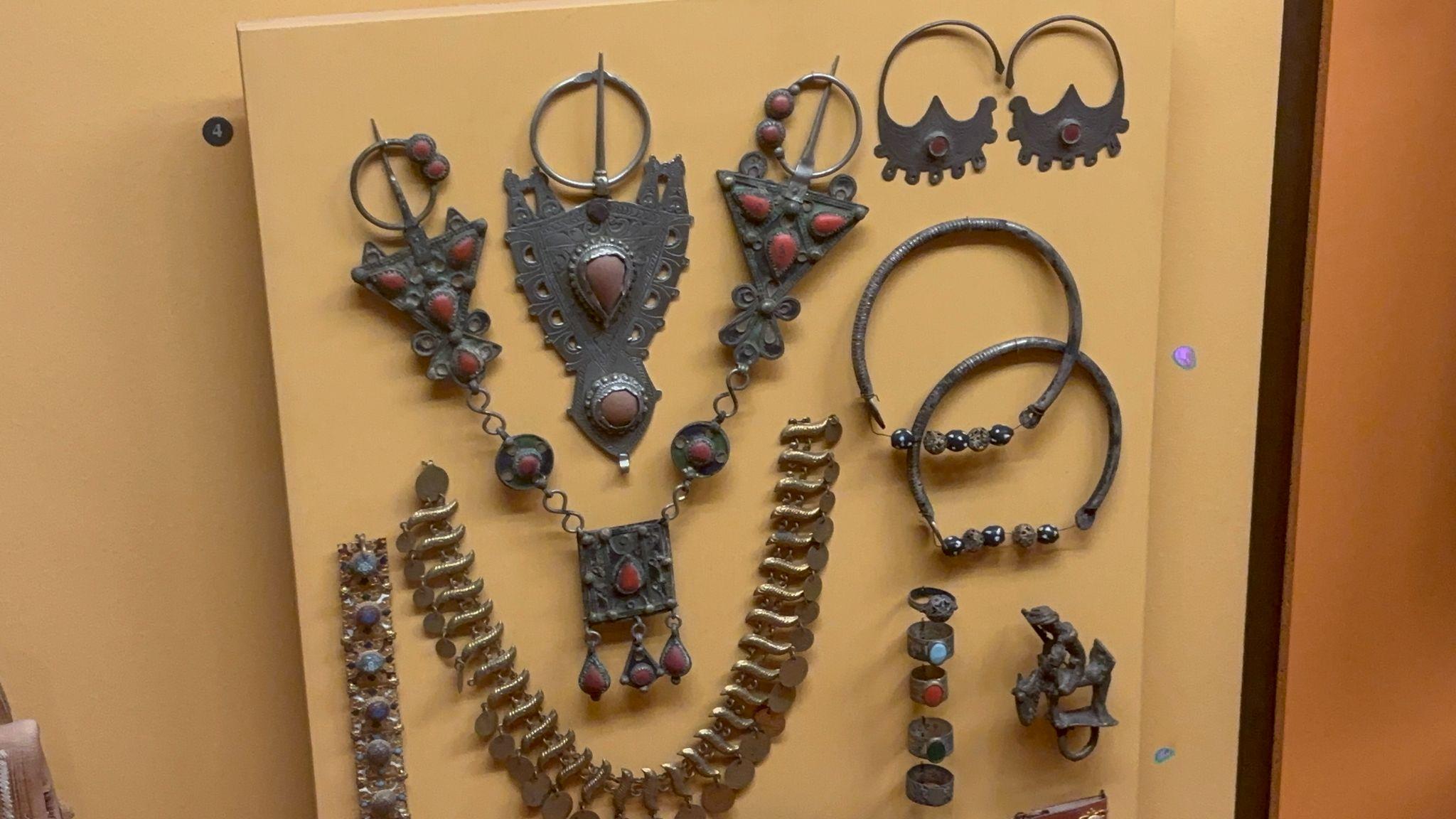
I also want to talk about some of the art jewelry. Usually I’m not a fan of intricate jewelry; I think it can be overkill. But seeing how this hangs, and how it’s plated with these red crystals, was incredibly cool.
Another thing I found really striking was the shell piece—or the object covered in shell-like pieces. I don’t know exactly what it was, or whether it was ceremonial, but it felt like something made with a huge amount of care and labor. You can almost imagine looking at it and hearing it rattle.
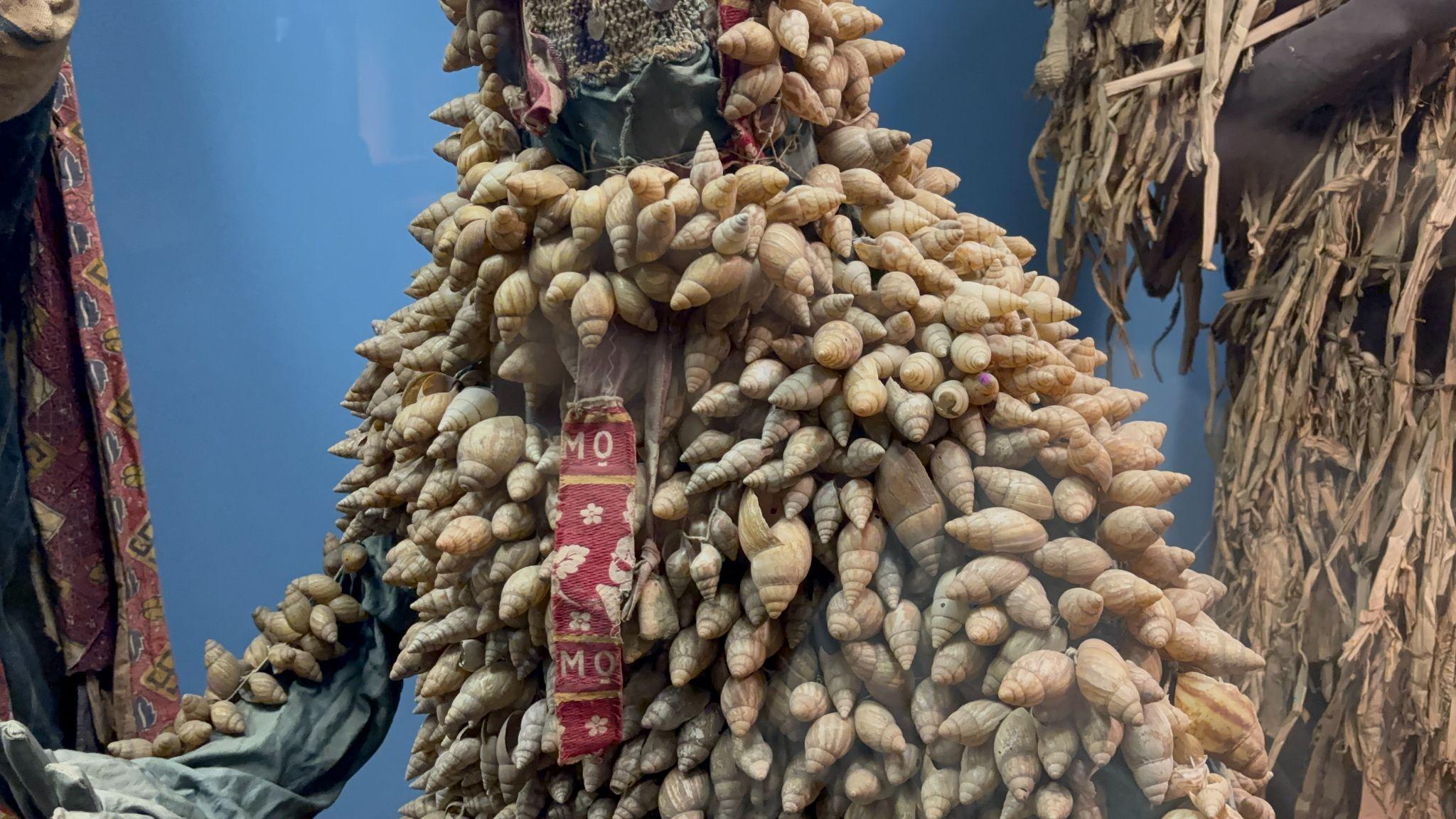
That made me think about the amount of intricate work that used to go into things in the past. A lot of times, religious or ceremonial meaning would push people to create art that was incredibly intricate. I imagine it would take so much time, even just finding all those shells, or whatever type of shell-like objects they are.
Humans are part of nature, so human-made things are also nature expressing itself at a different level. I think almost everything is nature. Everything exists in nature. Even cities are a byproduct of nature. Not to say that they’re natural, exactly, but they are a byproduct of nature.
So beauty happens everywhere, both in nature and in things made by humans. Some things are created with intent, and some things happen without intent. But they can be equally beautiful and equally mesmerizing, and I can be equally attracted to them.
I think the larger point is beauty at different scales. At the museum, that beauty was easy to find: in tiny insects made enormous, in crystals growing into geometric structures, in jewelry, in artifacts, in objects made with care and labor.
But I also think finding beauty is a skill you can develop. It’s a good exercise. I would encourage the reader to look for beauty in every world: in patterns, textures, colors, structures, and the things that catch the brain. For me, the things that stick with me the longest are the things that are most visually appealing. That’s a personal preference, but it’s also how I remember. The museum has information about animals, minerals, and human history, but the things I remember most are the beautiful things.