Published April 6, 2026
Through the Metropolitan Museum of Art
Through-line: bodies under pressure, bodies under devotion, bodies under transformation.
1. Bishop-saint panel
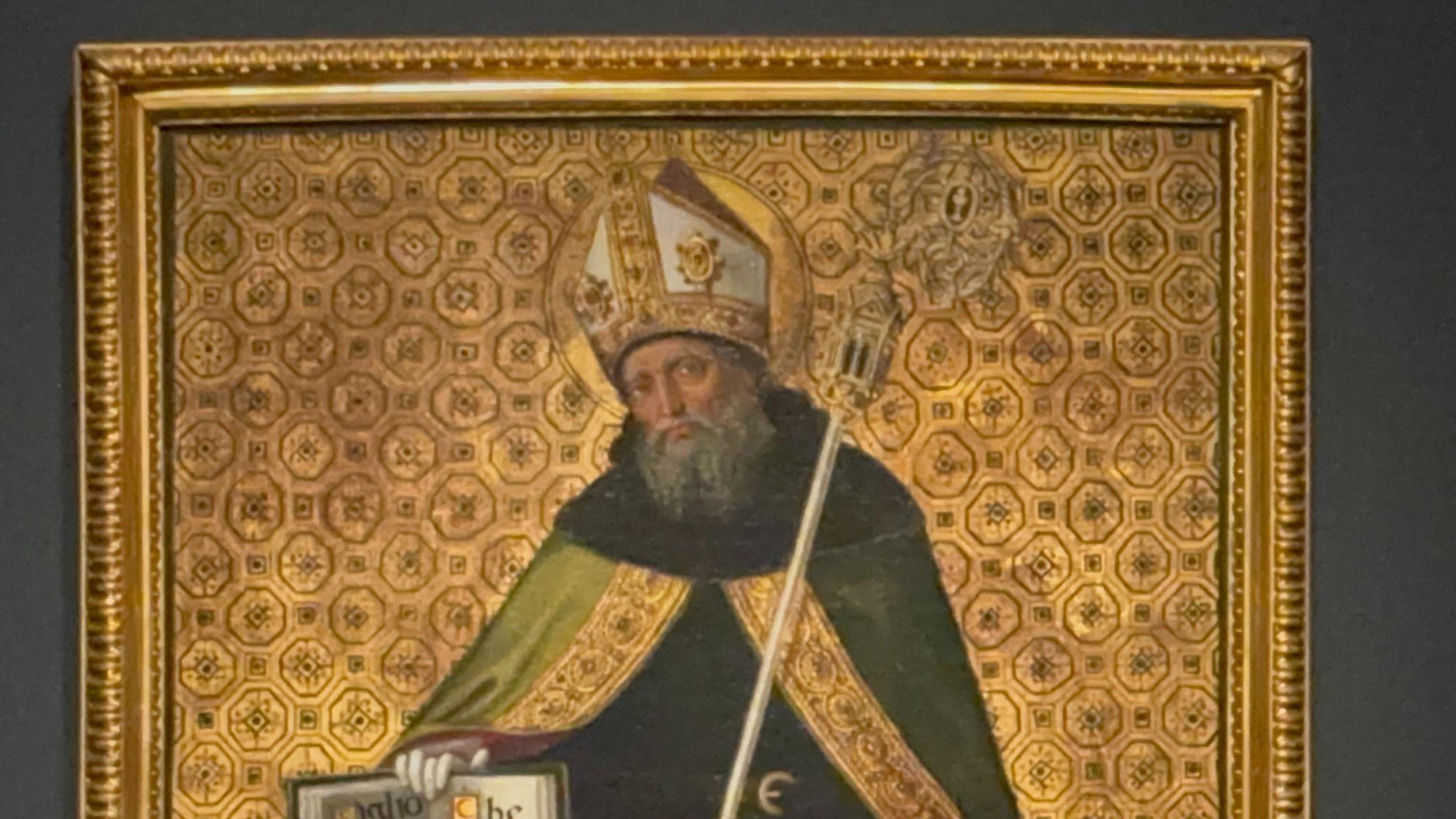
It’s pretty nice. I don’t really like a lot of the typical Jesus paintings, but this one works for me. The pattern and stuff like that is very good. The gold background makes the whole thing feel less like a normal scene and more like a sacred object. The figure is stiff and formal, but the pattern gives it a lot of life.
Research note: This appears to be a bishop-saint panel, identifiable by the mitre, crozier, halo, and book. The exact saint is unclear from the photo, but the format fits late medieval or early Renaissance devotional painting, where gold patterned backgrounds often signal sacred rather than realistic space.
2. Michelangelo / Battle of Cascina composition
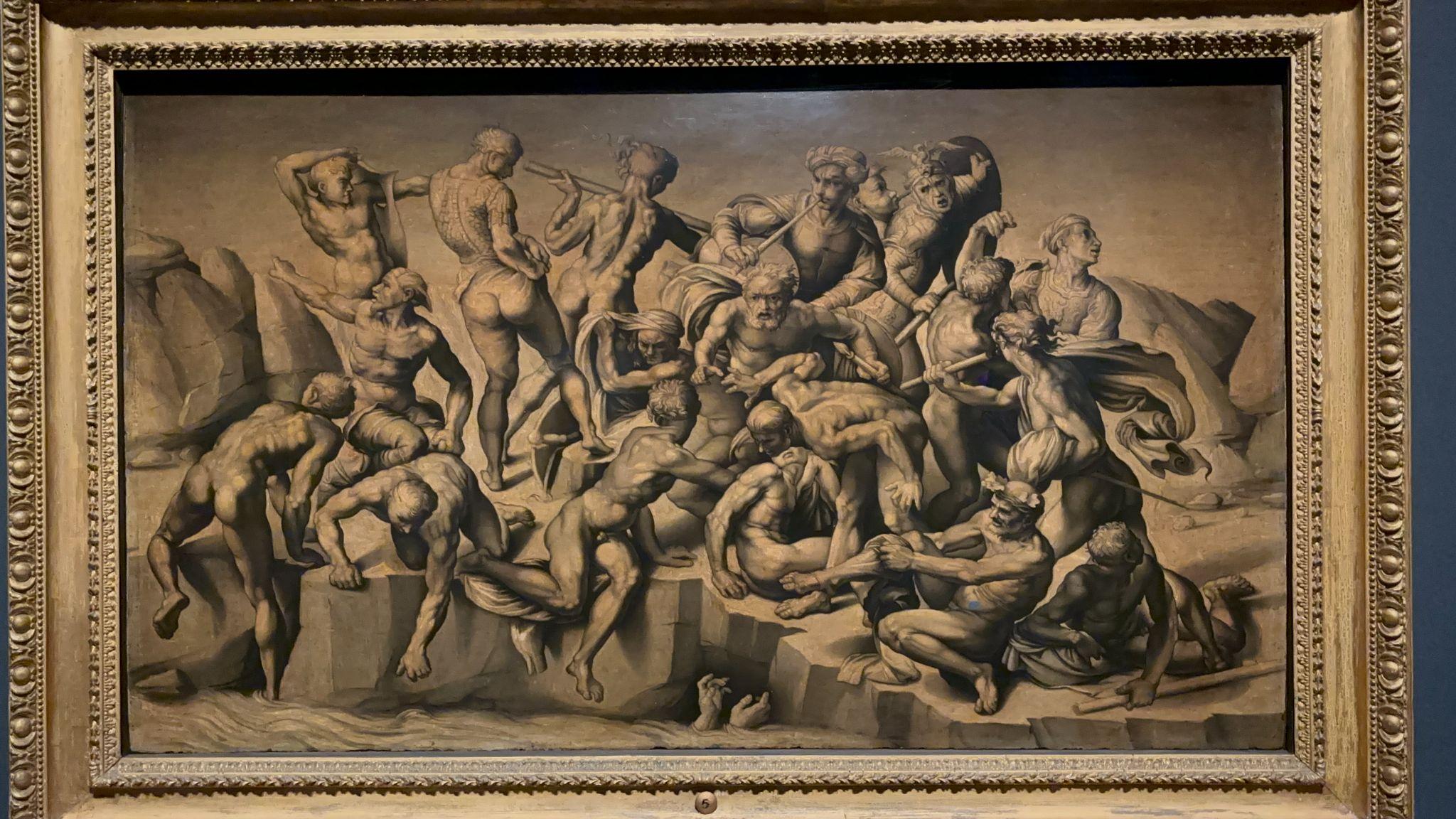
I like this one. It’s done up in bodies: the muscles, the veins, the shadows. There’s so much going on, but it’s very well balanced. It’s beautiful, and then it’s chaotic. There’s movement everywhere. Your eyes keep moving around the painting, from one body to another, and that makes it very unforgettable.
Research note: Michelangelo’s lost Battle of Cascina was commissioned for the Palazzo Vecchio in Florence, but he completed only the preparatory cartoon. The scene shows Florentine soldiers surprised while bathing, giving Michelangelo a chance to focus on twisting bodies, tension, and physical reaction.
3. Raphael, Mother and Child study
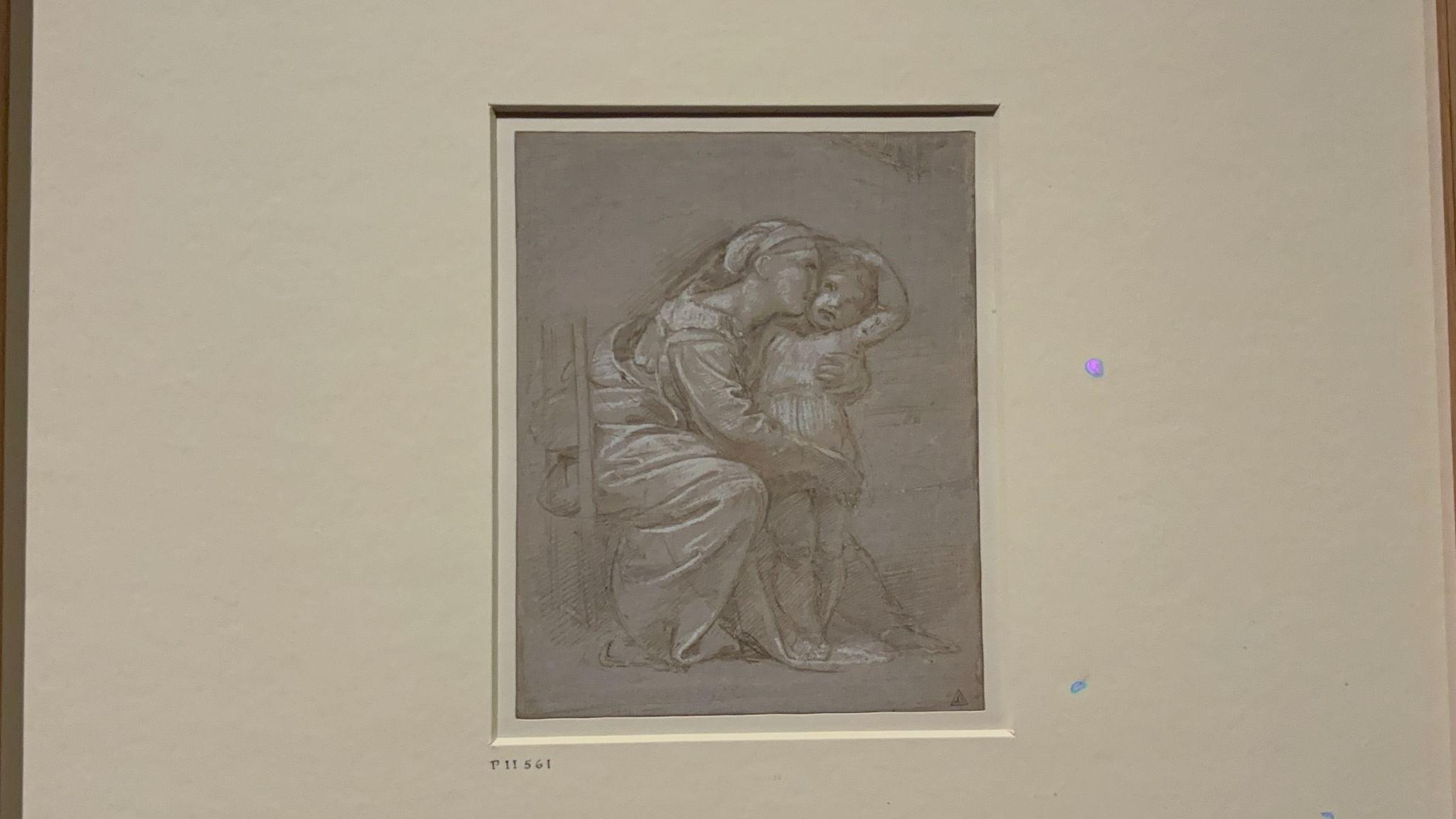
This next one is with the mom and the baby. It’s comforting. You can see the baby kind of leaning away. It’s a toddler, and the mom is really being affectionate, hugging it on both sides. All the fabric on the mom looks really nice as well. You can see the baby kind of pushing through and creasing the fabric.
Research note: This is likely Raphael’s Mother and Child, a study connected to the Madonna della Seggiola, made with metalpoint and white heightening on gray prepared paper. The gray paper lets the white highlights define the folds of fabric and the pressure of the child’s body.
4. Marcantonio Raimondi after Raphael, The Judgment of Paris
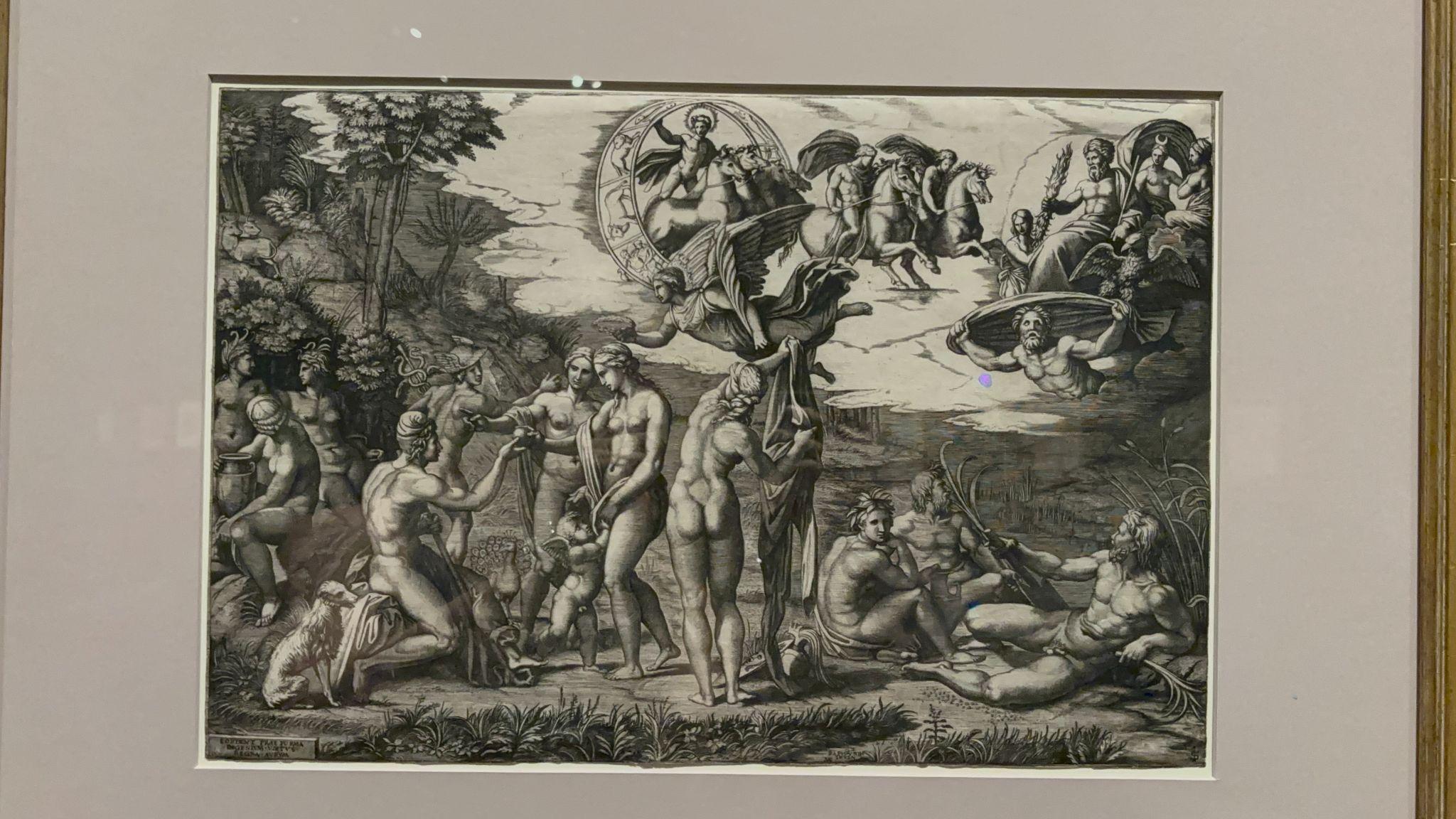
The next image in black and white…. The main subject, to me, is the sleeping woman. You can see people on the left and the right, and the gods coming from the sky on a sort of winged horse. It seems to be a winged horse. They’re holding thunderbolts, or maybe big reins, something like that.
There’s a lot where the more you look at it, the more details there are to see. That’s partly because the darker parts are the more detailed parts, the parts with more shadows. The whole image rewards looking around, because different pockets of the composition keep opening up.
Research note: This is The Judgment of Paris, an engraving after Raphael associated with Marcantonio Raimondi. The story comes from classical mythology: Paris judges the beauty contest between Juno, Minerva, and Venus, a choice that eventually leads toward the Trojan War.
5. Putto / child figure with vine
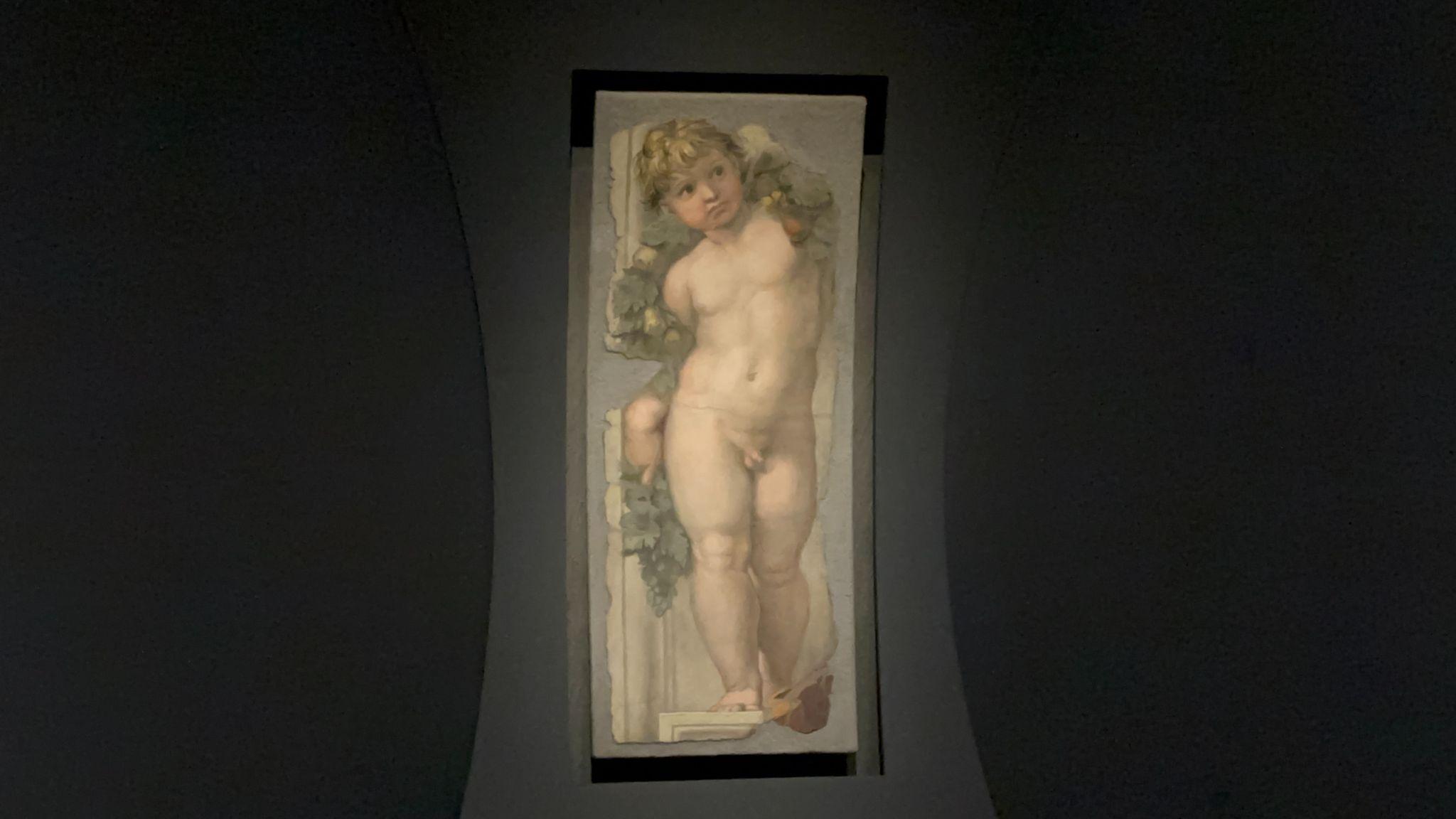
Then we have a little baby — not really a baby, more like a three- or four-year-old. He has this vine or plant across his shoulders, drooping down to the left, and he’s supporting it. Bits of the image still look odd, but you can see that he’s looking right into the abyss. And he’s kind of killing it.
Research note: The child appears to be a putto or decorative child figure, possibly connected to abundance, fertility, or Bacchic imagery because of the vine or plant form. The exact work is unclear from the photo, but the pose makes the small body feel both playful and strangely dramatic.
6. Raphael, The Vision of Ezekiel
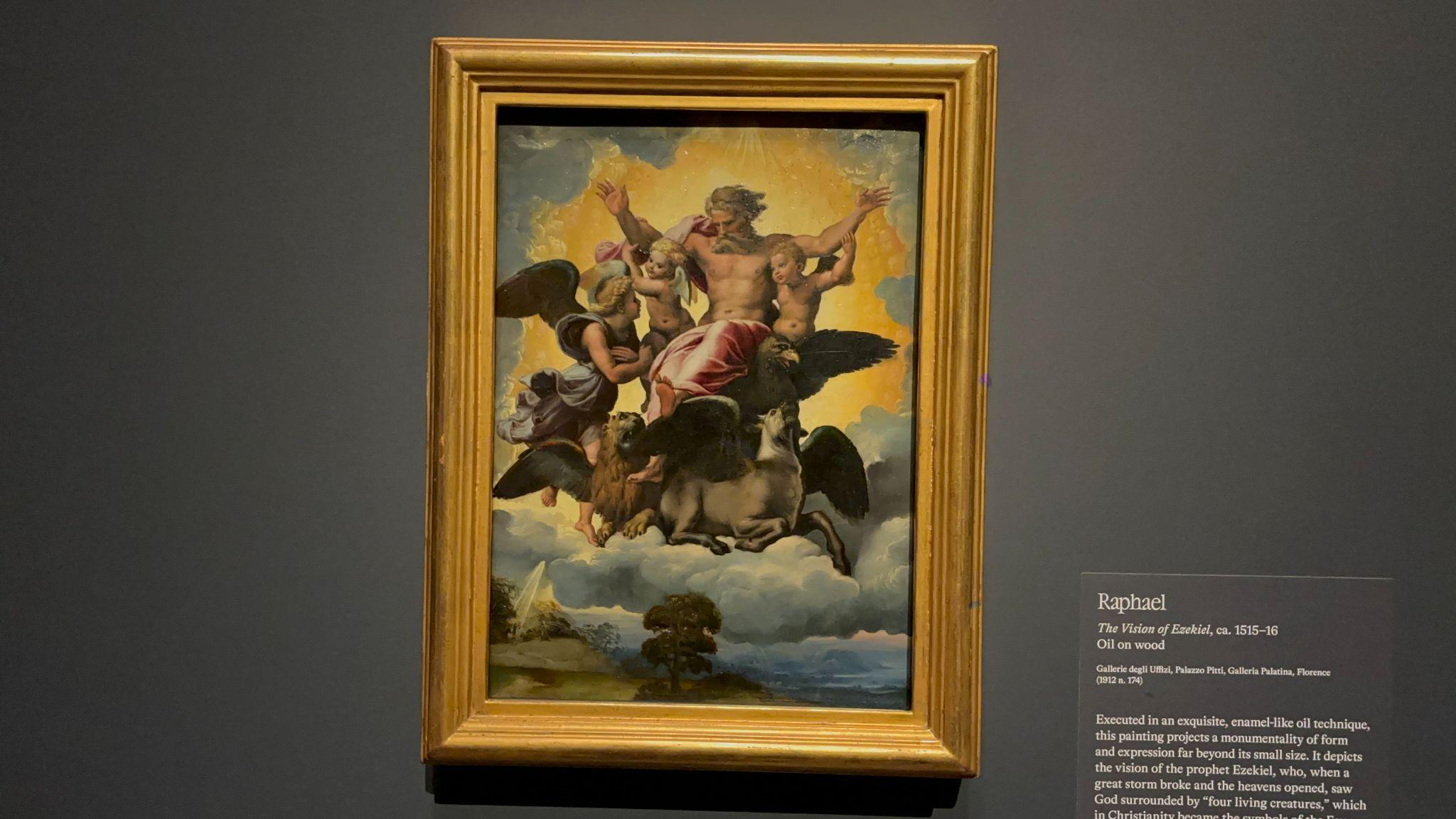
The next image seems to be Raphael’s The Vision of Ezekiel. The sky is opening up, and it’s very yellow and gold. The ground is pretty muted, and then you have these flares coming from the sky as God appears. You see two cherubs around his sides. He’s looking out, his hands are up, and there’s a Pegasus-like figure right below him, another winged griffin, and another winged bird beneath him.
He’s coming in with an insane pose, almost like he’s blessing the whole land. Then you have another angel coming in, almost seeming to greet him, which I really like.
Research note: Raphael’s Ezekiel’s Vision is a small oil-on-panel painting now associated with the Palatine Gallery at the Pitti Palace in Florence. The four creatures around God correspond to the symbols of the Evangelists: angel or man, lion, ox, and eagle.
7. Juan Gris, Head of a Woman (Portrait of the Artist’s Mother)
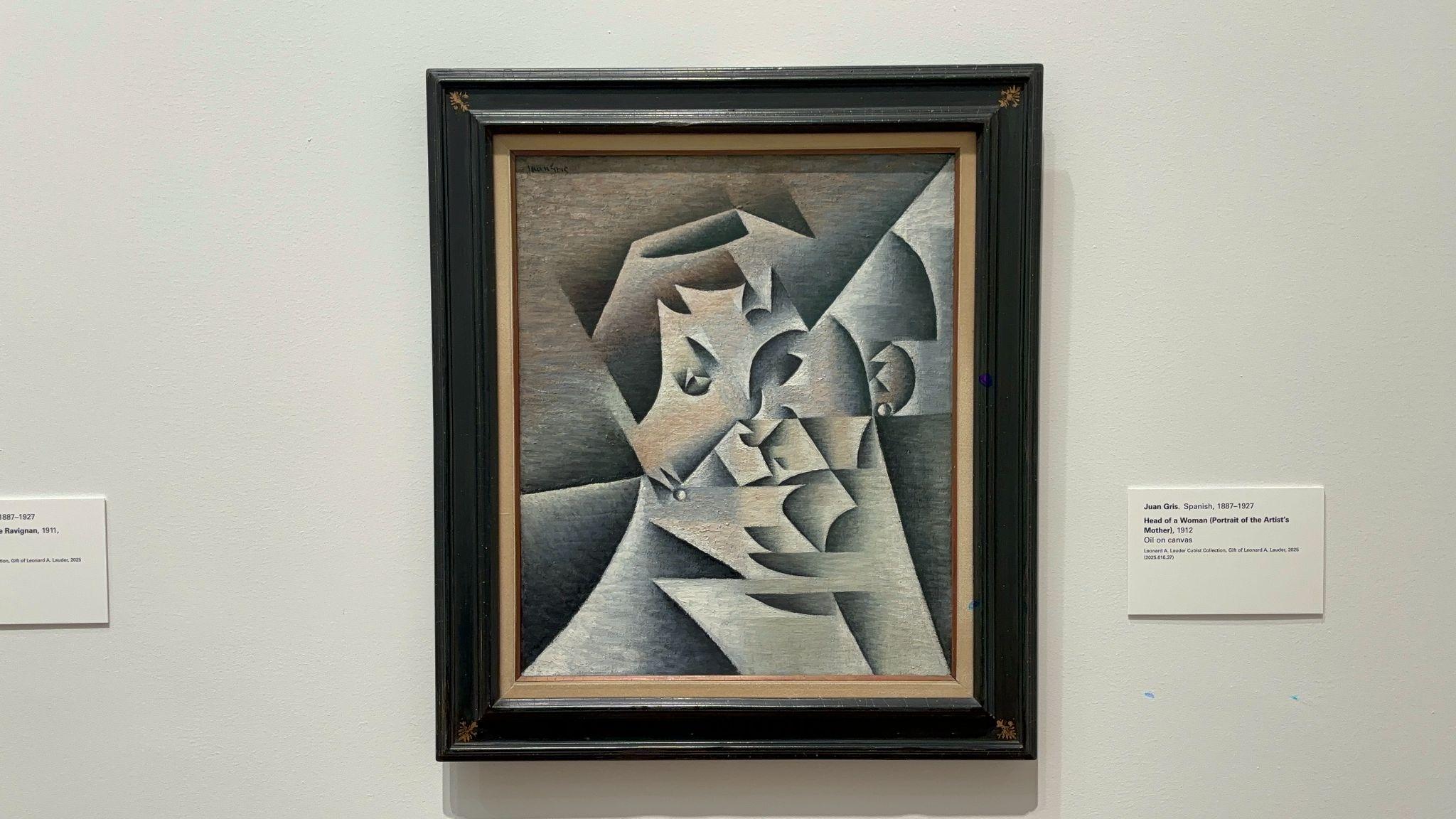
Then you have the woman in Cubism. My eyes are immediately brought to what seem to be pearl earrings. They’re on the left and right of her face. Then you can kind of see her eyes where the image gets dark, and then the nose. Your eyes get a little bit jumbled up with the Cubist aspect. To me, it’s very angular and very masculine.
Research note: Juan Gris painted Head of a Woman (Portrait of the Artist’s Mother) in Paris in 1912. The Met notes that the pearl earrings help make the face legible, even while the lower half of the composition becomes harder to read through the Cubist grid.
8. Franz von Stuck, Inferno
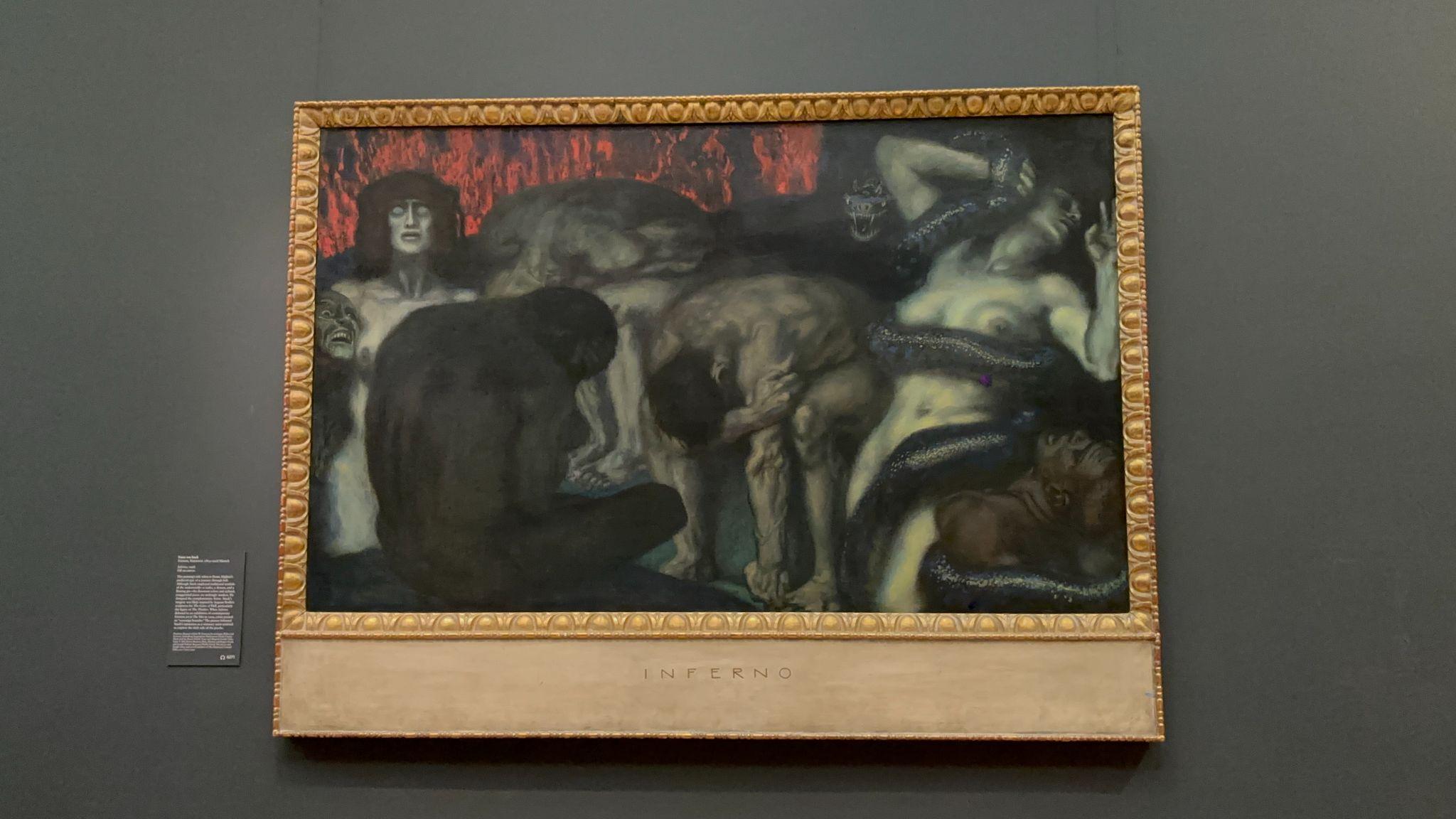
The next image is Inferno. You have one, two, three, four, five figures — six, going to the bottom right corner, half-concealed. Each figure looks, on the whole, almost Photoshopped into the image. You have the figure on the bottom left, and then the one all the way to the left, who has this rock-star ’80s haircut. His eyes are closed, and he seems to be obviously suffering.
Then there’s the hunched-over figure, which, to me, is the most painful one, because he can’t even stand up straight. He has to keep his back bent over. Then there’s another woman being strangled by a snake, and another man who is also being strangled. Each figure is kind of self-contained, so as a whole it looks a little bit Photoshopped, but that may also be because I can’t really see that much.
Research note: Franz von Stuck painted Inferno in 1908, drawing on Dante’s idea of hell while using modern color and exaggerated poses. The Met notes the snake, demon, and flaming pit as traditional underworld symbols, but the effect feels psychological and modern rather than simply illustrative.
9. Antoine-Émile Bourdelle, Herakles the Archer
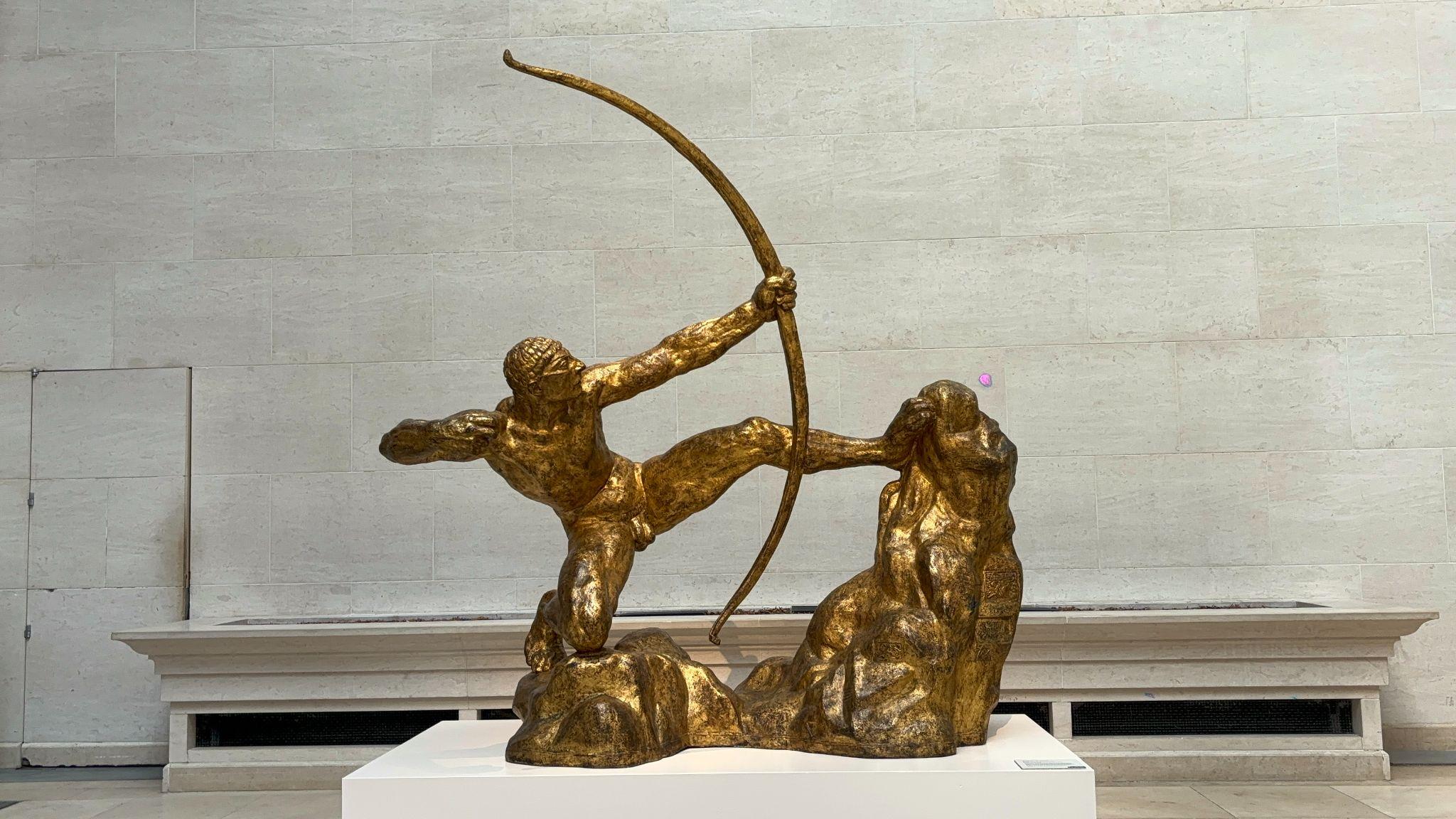
Finally, I went to the archer, which is all in gold. You can see the weight in his shoulder and the size of his bow. It has a lot of oomph to it, if that makes sense. The whole sculpture feels like it is built around physical tension: the body, the bow, and the direction of the shot.
Research note: This is Antoine-Émile Bourdelle’s Herakles the Archer, a 1909 gilt bronze at The Met. The sculpture shows Herakles drawing his bow to shoot the Stymphalian birds, with the whole body compressed into a pose of intense physical stress.
Walking through these, I kept noticing how every period uses the body differently: as a sign of holiness, a machine of motion, a vessel of tenderness, a mythological ideal, a divine apparition, a Cubist structure, a site of torment, and finally a body locked into action.